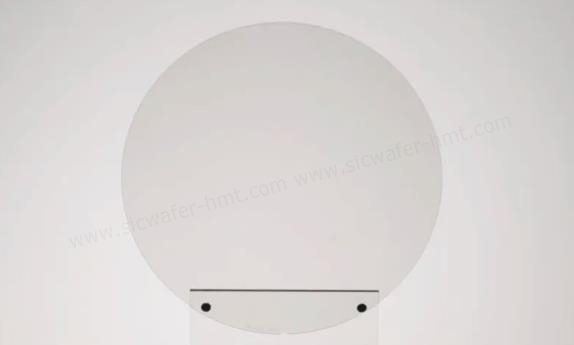
Semi-insulating 8 inch SiC Wafer Manufacturer For AR AI Optic
Reliable SiC wafer manufacturers supply high-resistivity (>10⁵ Ω·cm) semi-insulating wafers for AR optical waveguides and low-resistivity wafers for p...
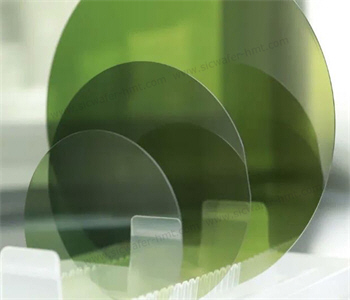
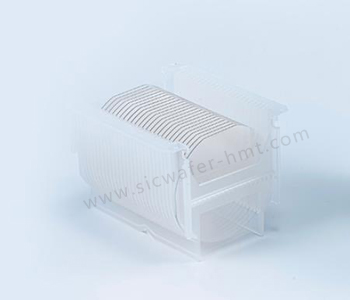
For SiC Wafer Manufacturers, producing substrates to specific end-uses is crucial. Silicon carbide (SiC) substrates are primarily categorized into two types: conductive and semi-insulating, each serving distinct high-tech industries. Leading SiC wafer manufacturers are now scaling production of optical-grade material to meet the rising demand from the AR/MR device market.
Conductive SiC Wafers (N-type & P-type): With a resistivity ranging from 15–30 mΩ·cm, these wafers are the backbone of the power semiconductor industry, used in high-efficiency power devices. However, due to effects like free carrier absorption, they exhibit high optical loss and are unsuitable for applications requiring light transmission.
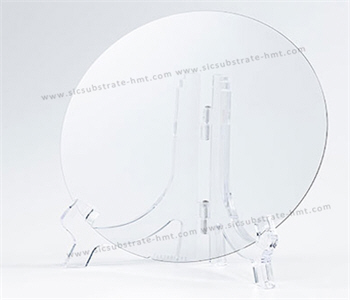
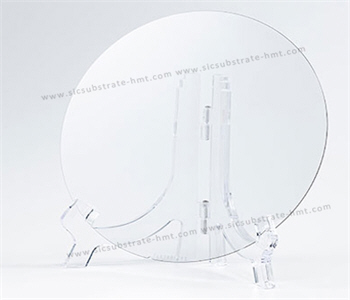
Semi-Insulating SiC Wafers: This grade features extremely high resistivity (>1E7 Ω·cm) and minimal free carrier concentration. These properties grant it exceptional broad-spectrum transparency and low optical loss, making it the ideal material for manufacturing optical waveguides in Augmented Reality (AR) glasses lenses.
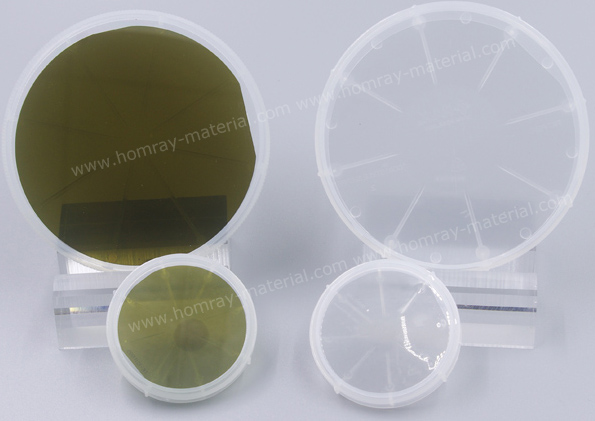
AR AI Optic SiC Wafer Basic Parameters
| Diamension | 6 inch 8 inch or 12 inch |
| Thichkness | 500um, 700um |
| Dopant | Un-doped |
| Surface Orientation | {0001} ±0.5° |
| Refractive Index | >2.6%@400-800nm |
| Absorption | <0.35@400-800nm |
| Transmittance | ≈65%@400-800nm |
| Reflectivity | ≈35%@400-800nm |
AR glasses (augmented reality glasses) are intelligent wearable devices that superimpose virtual information onto the real world, with the core being the perfect fusion of virtual information and the real world. Compared to VR glasses (virtual reality glasses), the main difference lies in the fact that AR glasses use optical display technology to overlay digital content (such as images, videos, 3D models, etc.) onto the real world, integrating with the real environment to provide users with an augmented reality experience. In contrast, VR glasses immerse users entirely in a virtual environment through fully enclosed display screens, preventing them from seeing the real world.
Silicon Carbide Material: High Refractive Index Helps Achieve a Wide Field of View (FOV)
The refractive index of SiC material can reach over 2.6, offering significant advantages compared to resins and glass. A single lens can achieve an FOV of over 80 degrees. Regarding the refractive indices of commonly used materials, ordinary resin is about 1.51, while high-refractive-index resin is about 1.74; ordinary glass is about 1.5, while high-refractive-index glass is about 1.9. In contrast, silicon carbide (SiC) can reach over 2.6. In the optical waveguide structure, the higher the refractive index of the substrate material, the larger the FOV of the AR lens. Traditional glass can achieve only about 40 degrees even with three layers stacked, whereas a single SiC lens can achieve over 80 degrees FOV, providing a thinner size and larger, clearer visual effects.
CATEGORIES
LATEST NEWS
- Introduction to the main functions of PbootCMS
What Is a TCB Nozzle? Materials, Vacuum Holding and SiC Nozzle Manufacturing
- Introduction to the main functions of PbootCMS
SiC : Industrial Ceramic vs Semiconductor Applications
- Introduction to the main functions of PbootCMS
How Does AI Help Singe Crystal SiC Boule Growth
- Introduction to the main functions of PbootCMS
Technical Analysis of SiC Wafer For Power Semiconductor Devices in New Energy Vehicles
CONTACT US
Contact: Mr.Kimrui
Phone:
Tel: Please send your detailed inquiry or requirements via email below.
Email: kim@homray-material.com
Add: Please send your detailed inquiry or requirements via email below.